|
Dear friend,
This week in worship we will be discussing one of many female disciples of Jesus, Lydia.
Lydia’s color was purple and so we invite you to wear purple to worship this week as we celebrate Lydia and other women.

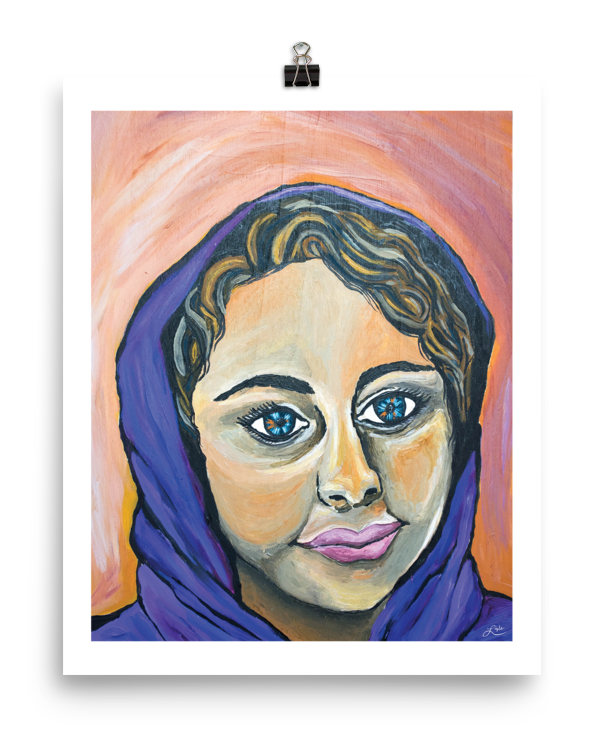
FROM THE ARTIST:
As the reach of the apostles expands, Paul, Silas, Timothy, and their companions make their way through Asia Minor to Europe, stopping briefly in Philippi, part of modern-day Greece. Since there may not have been an established synagogue in Philippi, on the Sabbath they find a prayer-house on the river, a space filled not with men and high priests, but women. They join them and as Paul speaks, one woman in particular—Lydia of Thyatira, a Gentile devoted to Jewish worship, a dealer of purple cloth—listens intently, her heart expanding with every word.
Despite her outsider status (Thyatira was part of Asia Minor) and how women are typically portrayed in scripture, Lydia is a woman of power, influence, and dignity. Purple dye was a luxury item for the elite, so we are to assume that Lydia is an established businesswoman. She is also, surprisingly, the leader of her household. After being stirred by Paul’s message, she and “her household” are baptized. No patriarch is named—no man gets credit or gives permission. Lydia’s first act as a new disciple is hospitality. She welcomes the apostles into her home (without the permission of a patriarch). Later, after Paul and Silas are released from prison, her large home becomes the meeting place for the apostles and the growing Christian community in Philippi.
As the only Philippian convert named in Acts, Lydia was quite possibly the leader and patron of the Philippian church. She used her wealth to establish the community, she risked her reputation as a businesswoman to house foreigners released from prison, she sanctified her conversion with acts of radical hospitality. In this image, I wanted her eyes to be the focal point. I hope they draw you in, radiating her warmth.
—Lisle Gwynn Garrity
|